
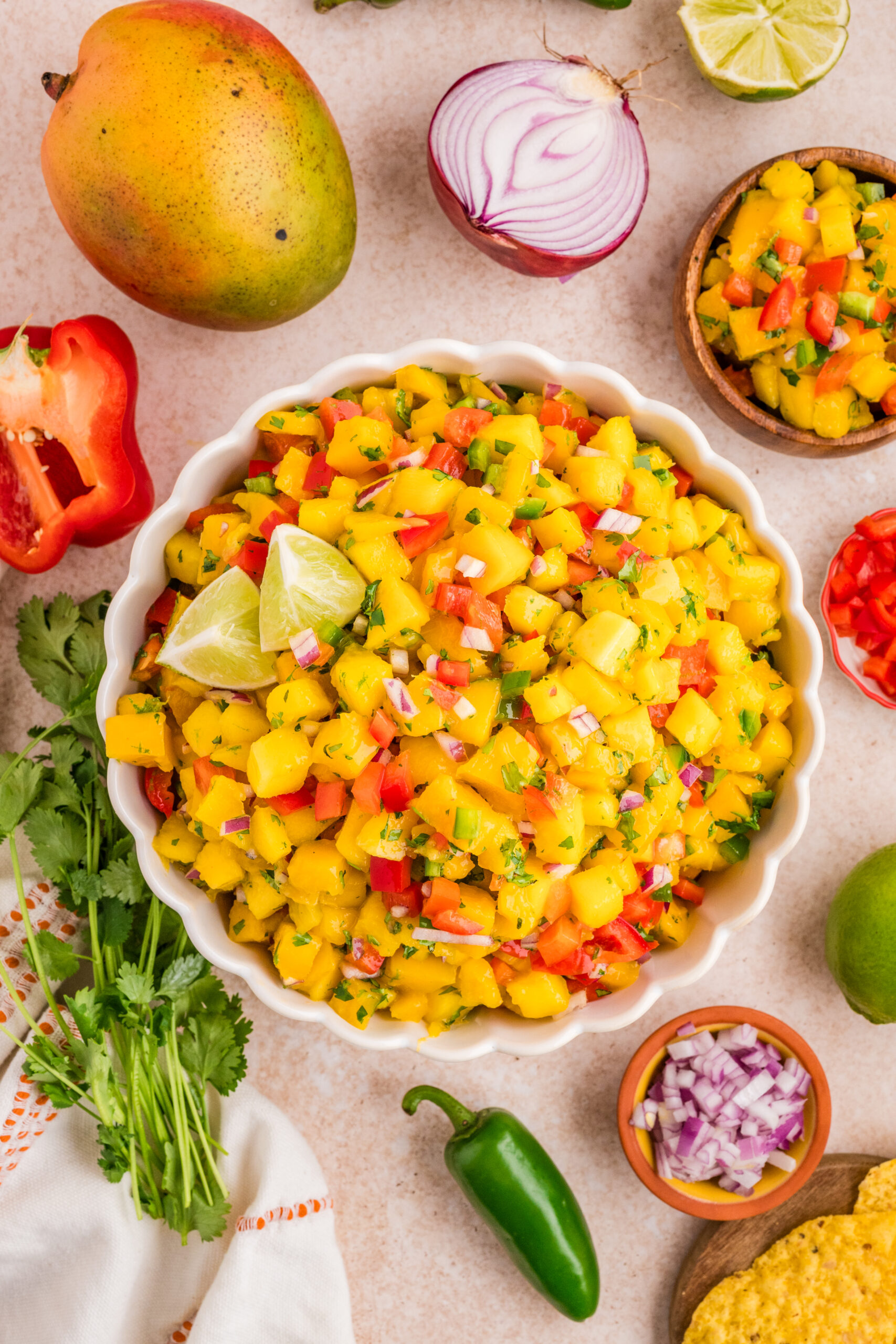
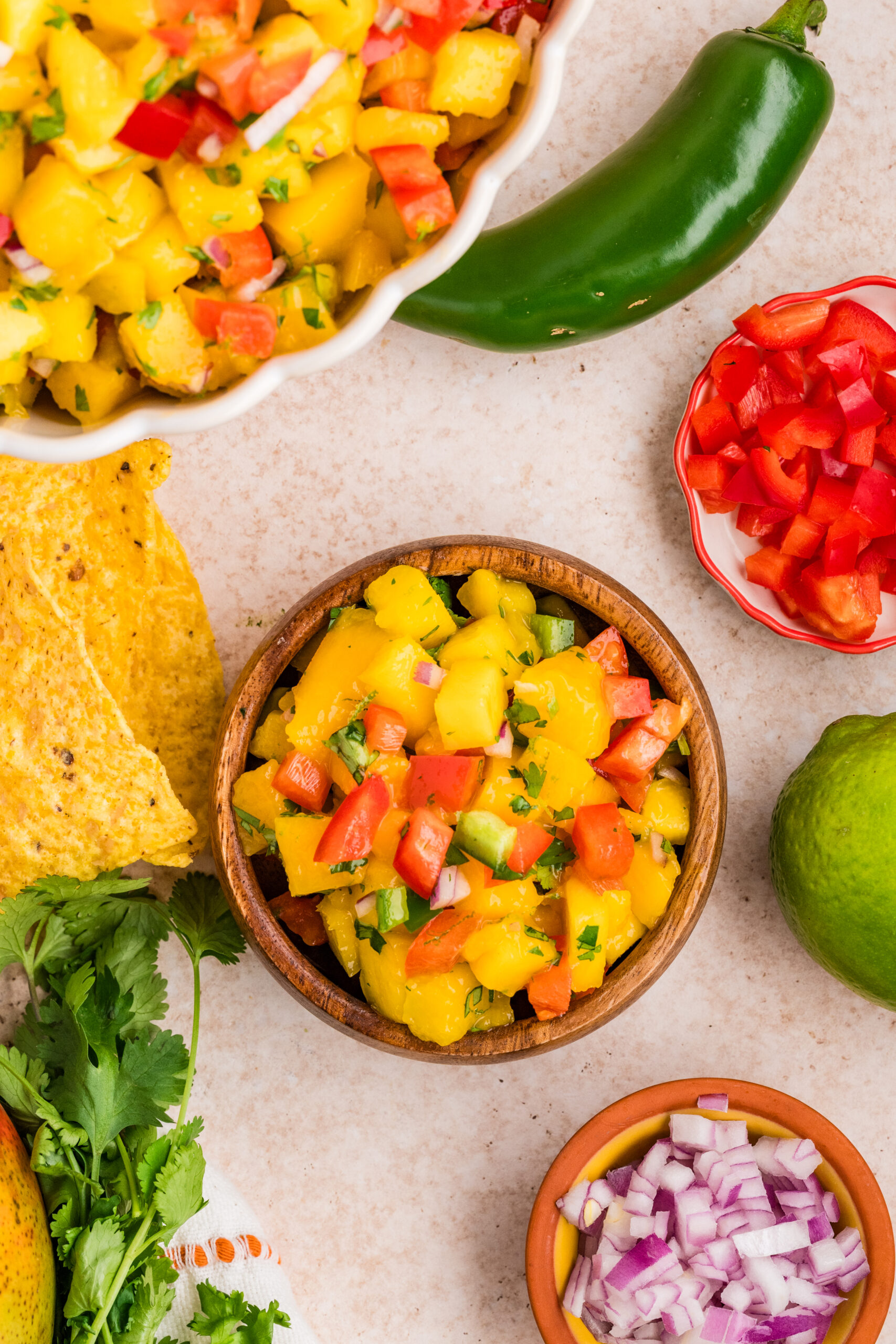
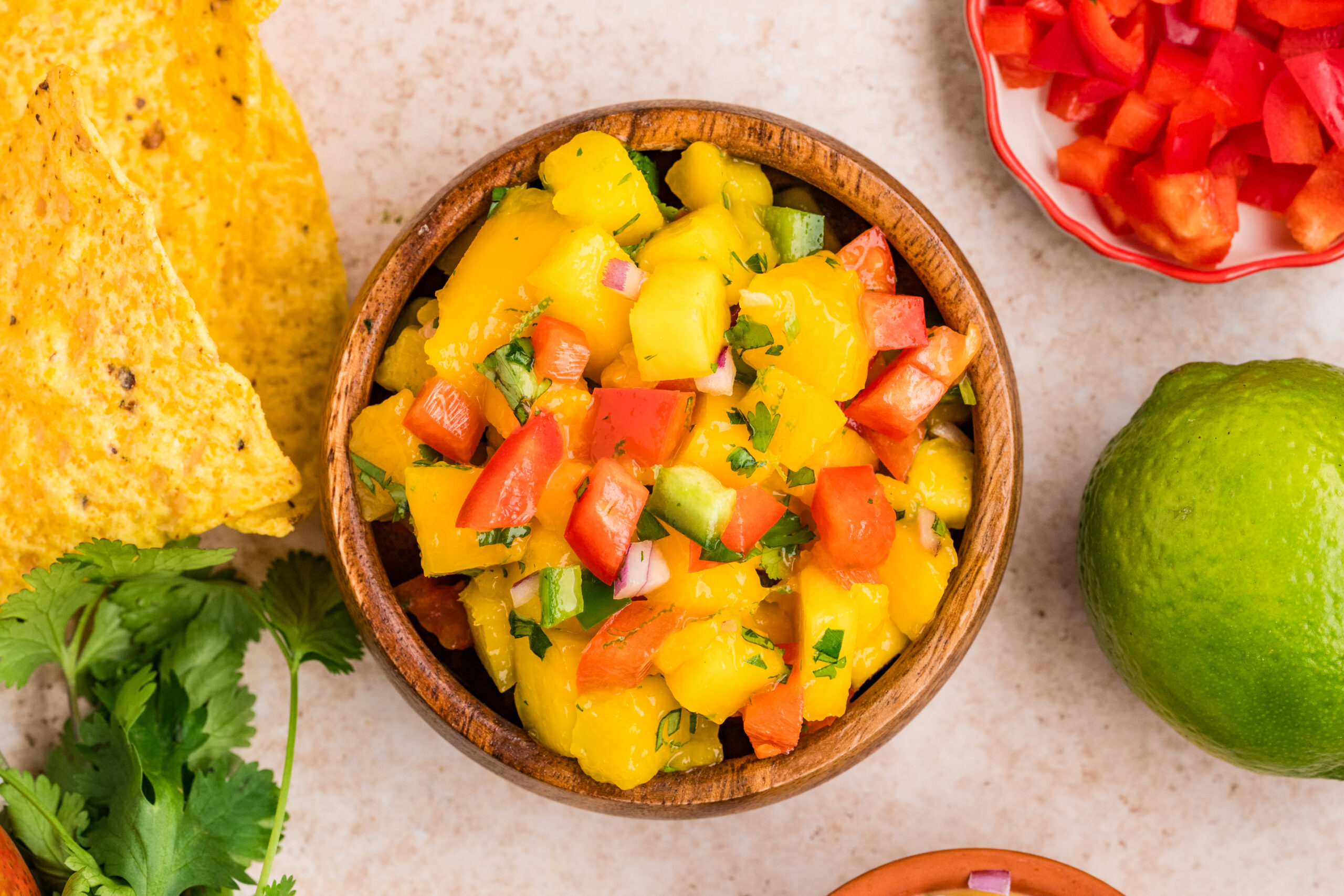
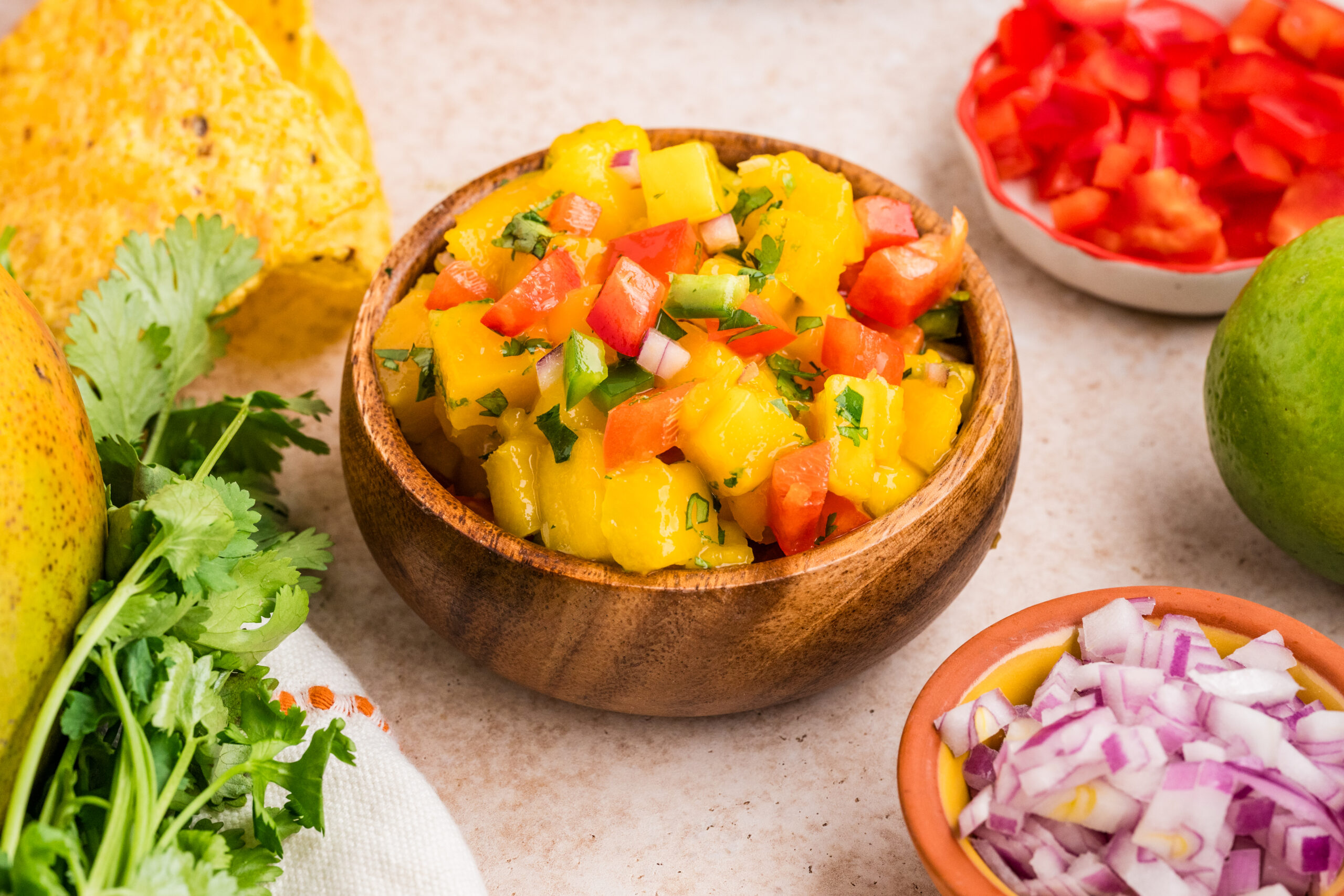
This easy mango salsa recipe is bright, colorful, and bursting with fresh flavor. Juicy ripe mangoes are tossed with crisp red bell pepper, red onion, cilantro, jalapeño, fresh lime juice, lime zest, and a touch of kosher salt for the perfect balance of sweet, tangy, fresh, and spicy.
It is one of those simple recipes that instantly makes a meal feel more exciting. Serve it with tortilla chips for an easy summer appetizer, spoon it over tacos, add it to a rice bowl, or pair it with grilled chicken, shrimp, or salmon.
In This Post
The salsa takes about five minutes to assemble. Letting it rest in the refrigerator for 25 minutes gives the mango, lime, cilantro, and jalapeño time to blend into one refreshing, flavorful bite.
To make fresh mango salsa, combine diced ripe mangoes, red bell pepper, red onion, cilantro, and jalapeño. Add fresh lime juice, lime zest, and kosher salt, toss gently, and refrigerate for about 25 minutes before serving. bm,
Why You'll Love This Fresh Mango Salsa
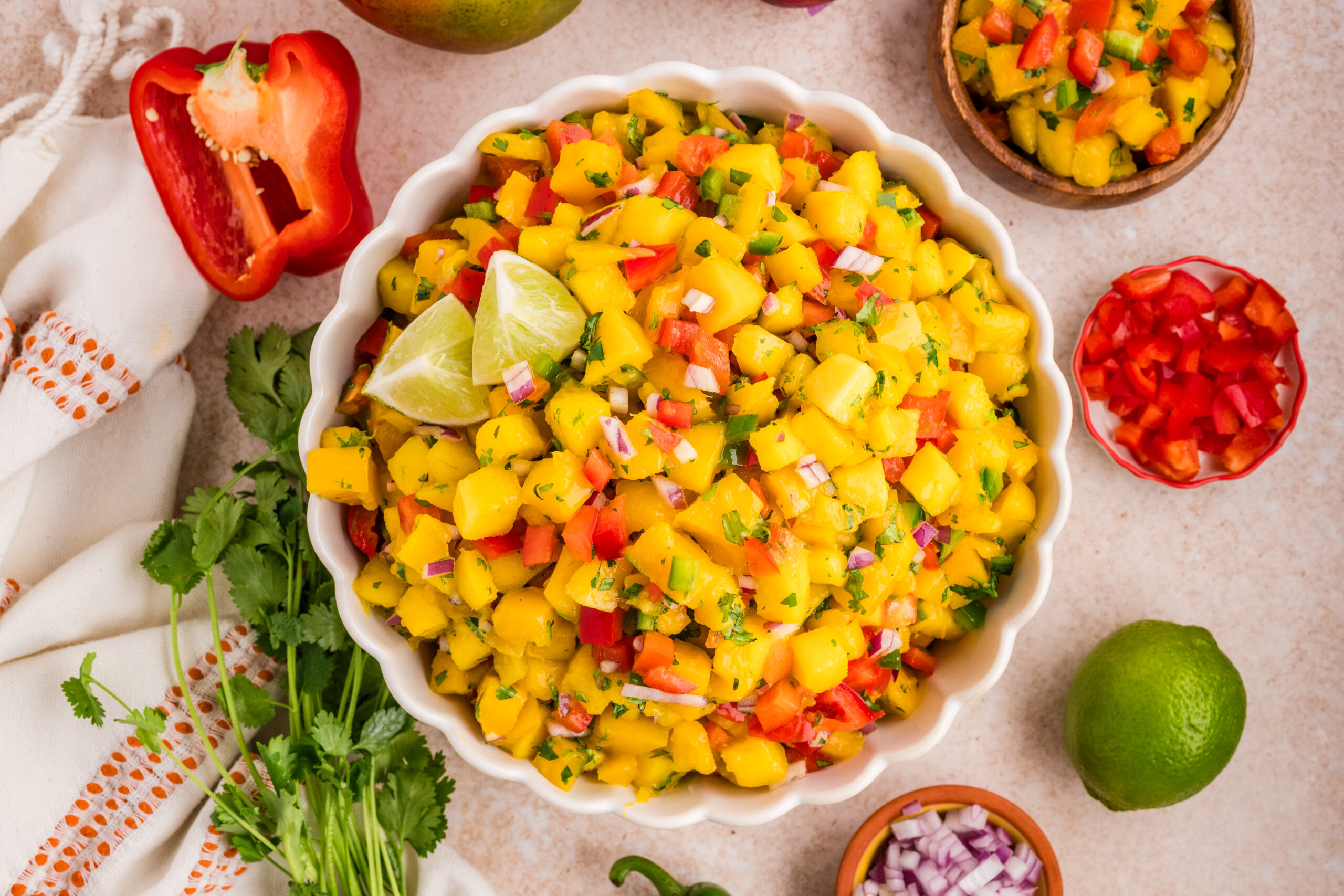
This fresh mango salsa is easy enough for an everyday snack but colorful and flavorful enough to serve at a party.
- Quick and easy: It takes only five minutes of active preparation.
- No cooking required: Chop, toss, chill, and serve.
- Fresh and colorful: Mango, bell pepper, onion, jalapeño, and cilantro create a gorgeous mix of colors and textures.
- Sweet and spicy: Ripe mango balances the gentle heat of fresh jalapeño.
- Easy to customize: Make it mild, medium, or spicy depending on your family's preference.
- Versatile: Serve it as a dip, topping, condiment, or fresh side dish.
- Perfect for entertaining: The recipe makes approximately four cups, enough for about eight servings.
- Naturally plant-based: The ingredient list is naturally vegan, dairy-free, and gluten-free.
What Is Mango Salsa?
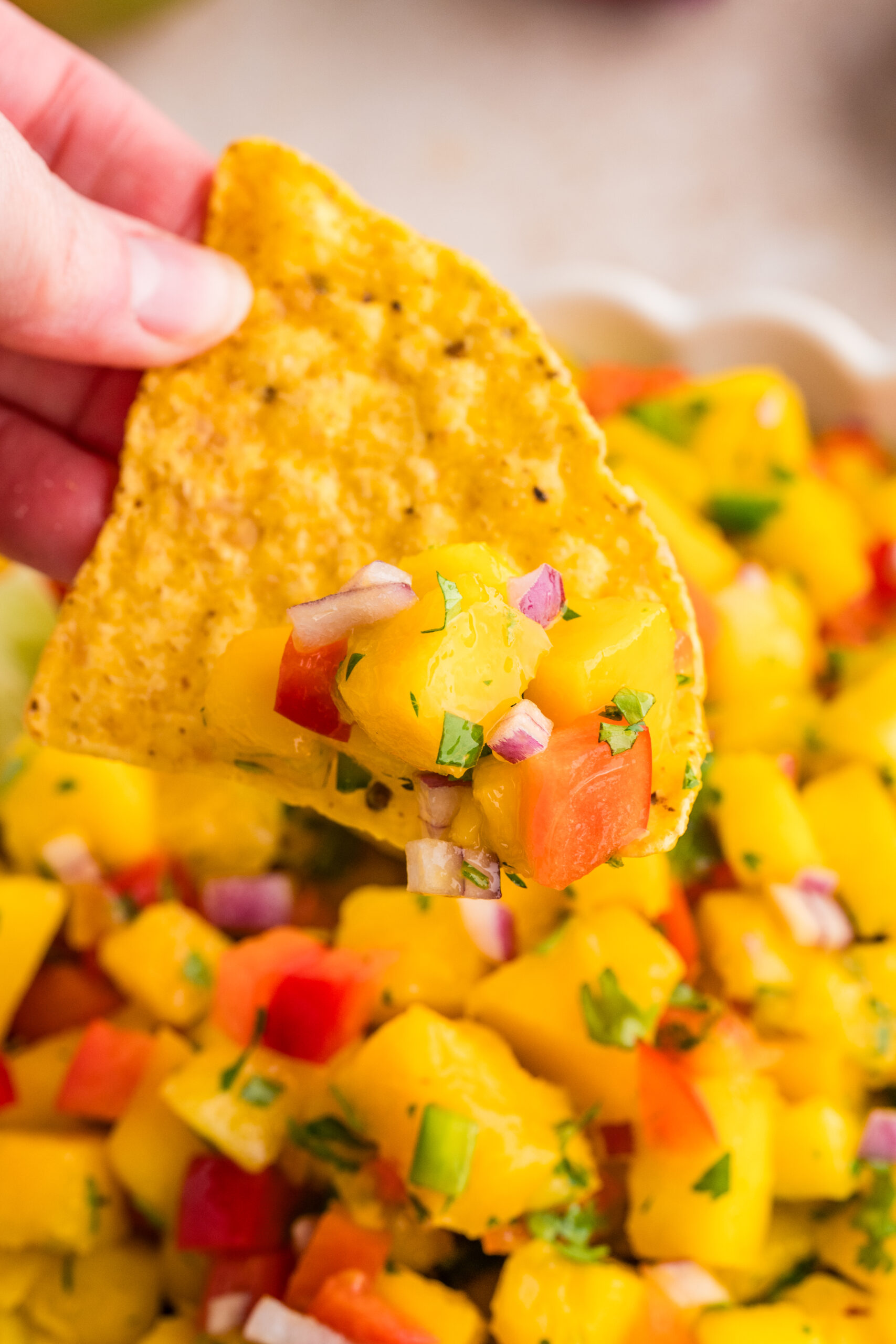
Mango salsa is a fresh fruit salsa made with diced mangoes, crisp vegetables, herbs, chile pepper, and citrus. Unlike traditional tomato salsa, this version uses ripe mango as its juicy, naturally sweet base.
The mango is balanced by tangy lime juice, savory red onion, fresh cilantro, and jalapeño. Red bell pepper adds a refreshing crunch without making the salsa hotter.
The result is similar in texture to pico de gallo but has a sweeter, more tropical flavor. It works equally well as a tortilla-chip dip and as a topping for tacos, fish, grilled meats, salads, and rice bowls.
Mango Salsa Ingredients
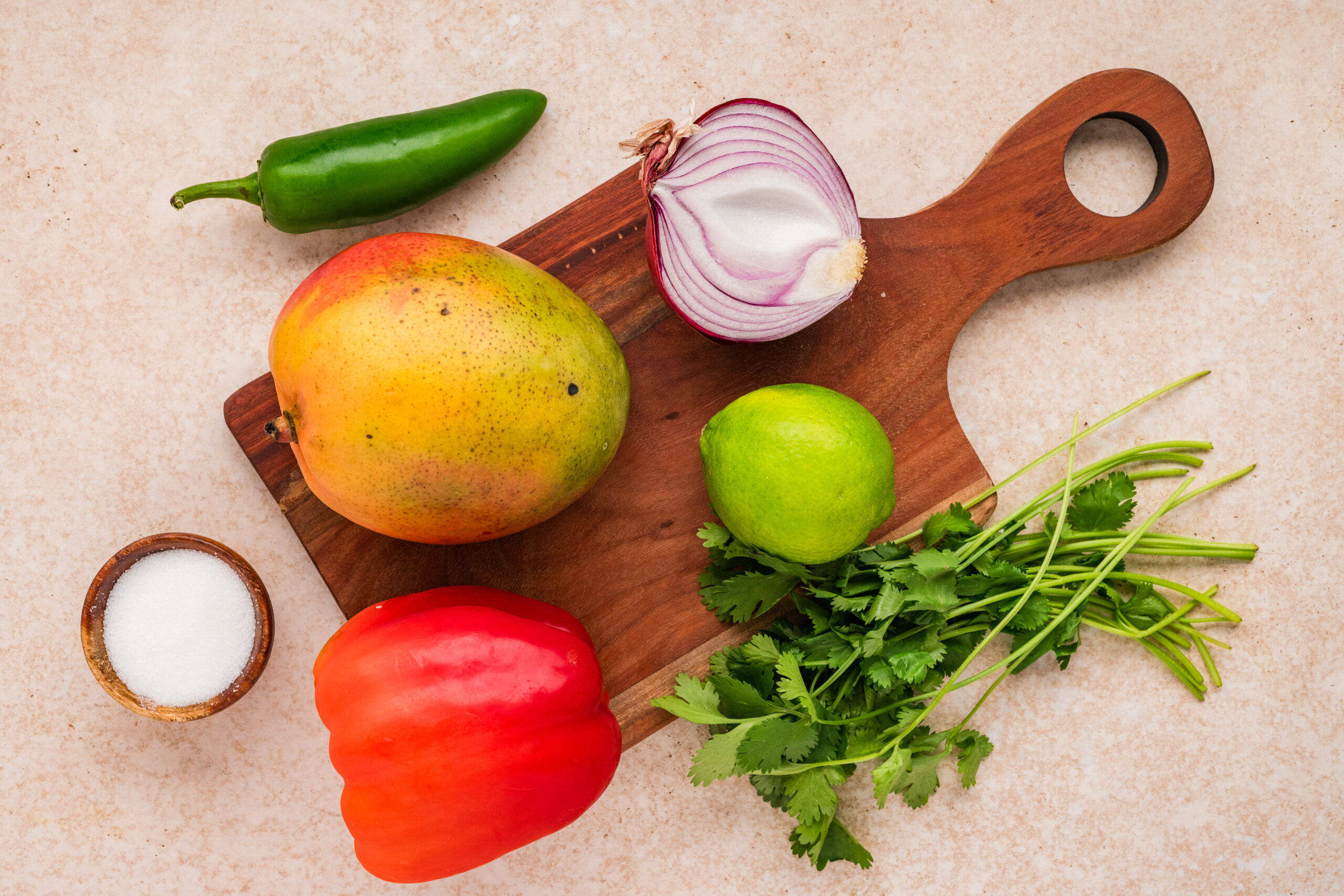
This homemade mango salsa uses only eight fresh ingredients. Because the recipe is so simple, choosing ripe produce and cutting everything evenly will make a noticeable difference.
Ripe Mangoes
You will need three large ripe mangoes. The mangoes should feel slightly soft when gently squeezed but should not be mushy.
A firm, underripe mango will be difficult to cut and will not provide the sweetness this salsa needs. An overly soft mango may collapse as the salsa is tossed and create a mushier texture.
Red Bell Pepper
Red bell pepper adds bright color, natural sweetness, and a crisp texture. Remove the stem, seeds, and white membranes before dicing it.
Try to cut the bell pepper into pieces similar in size to the diced mango. Uniform pieces make the salsa easier to scoop and give every bite a more balanced mix of ingredients.
Red Onion
Red onion brings a crisp, savory bite that keeps the salsa from tasting overly sweet. Dice it finely so it blends with the other ingredients instead of overpowering them.
For a gentler onion flavor, place the diced onion in cold water for five minutes. Drain it well and pat it dry before adding it to the bowl.
Fresh Cilantro
Fresh cilantro gives mango salsa its distinctive bright, herbaceous flavor. Remove any thick stems and roughly chop the leaves and tender stems.
Anyone who does not enjoy cilantro can leave it out or replace it with a smaller amount of fresh parsley or mint.
Jalapeño
One jalapeño gives the salsa a gentle, family-friendly kick. Removing its seeds and inner membranes produces a milder salsa.
For more heat, leave a small amount of the membrane attached or add another portion of jalapeño. Always wash your hands thoroughly after handling fresh peppers and avoid touching your eyes.
Fresh Lime Juice
The juice of two limes provides the acidity that balances the sweetness of the mango. Freshly squeezed lime juice gives the salsa a brighter flavor than bottled lime juice.
Depending on the size and juiciness of the limes, two limes should provide approximately three to four tablespoons of juice.
Lime Zest
The zest of one lime is a small addition that gives this recipe an extra layer of citrus flavor. Zest the lime before squeezing it, removing only the thin green outer layer and not the bitter white pith underneath.
Kosher Salt
Kosher salt brings all the flavors together. Begin with ½ teaspoon, chill the salsa, and then taste it before adding more.
If substituting table salt, begin with approximately ¼ teaspoon because its finer crystals make it taste saltier by volume.
How to Choose Ripe Mangoes for Salsa
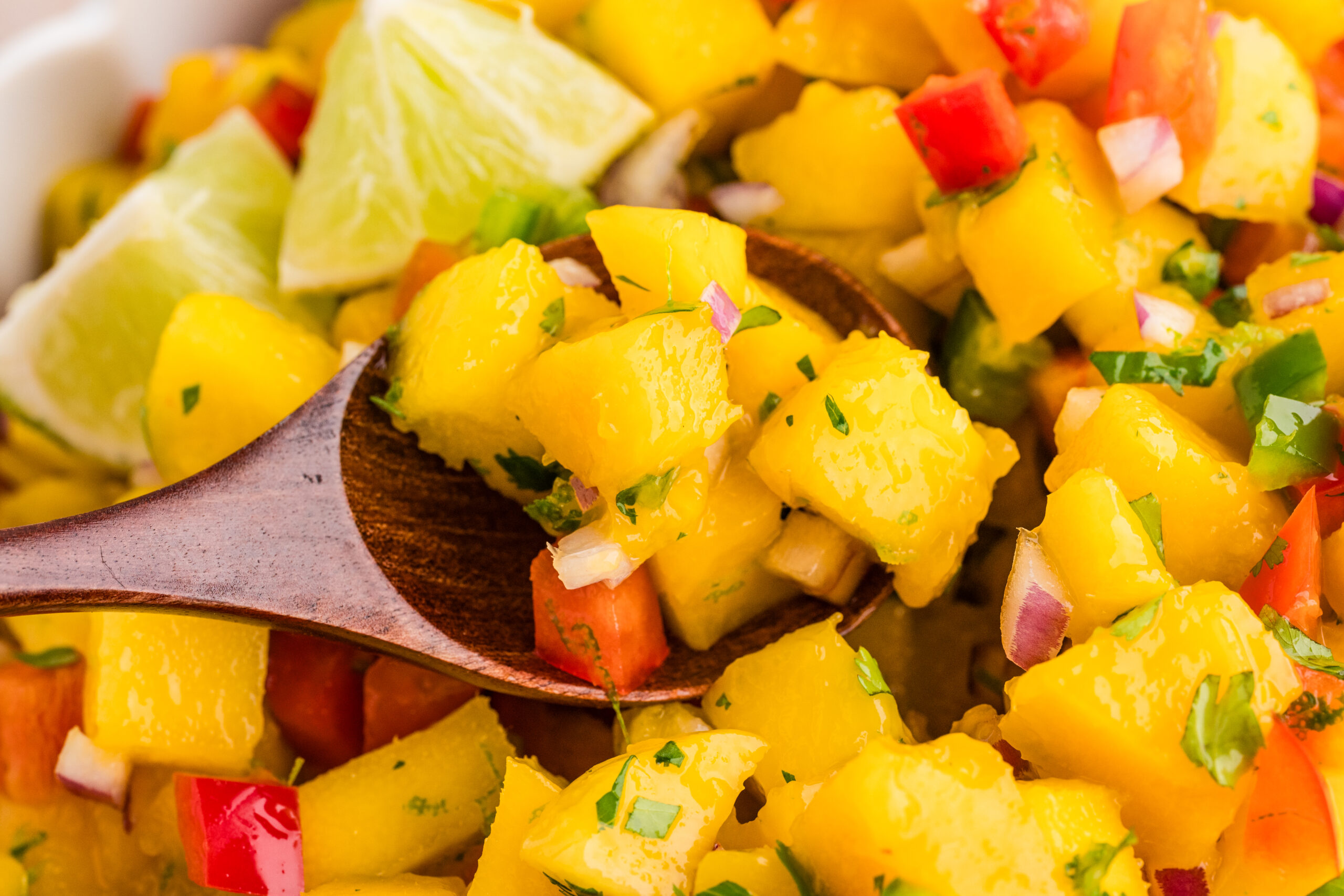
The best mangoes for salsa are ripe, sweet, and juicy but still firm enough to hold their shape after dicing.
Gently squeeze the mango with your fingertips. It should give slightly, similar to a ripe avocado or peach. A mango that feels completely hard needs more time to ripen. One that feels extremely soft may be better suited for a smoothie or puree.
Do not rely only on the mango's skin color. Different mango varieties remain green, turn yellow, develop a red blush, or show a mixture of colors as they ripen.
You may also notice a sweet, fruity aroma near the stem of a ripe mango.
To ripen hard mangoes, leave them at room temperature. Placing them inside a loosely closed paper bag can help them ripen more quickly. Once they are ripe, move them to the refrigerator until you are ready to make the salsa.
How to Cut a Mango for Salsa
Mangoes have a long, flat pit through the center. The easiest way to dice one is to remove the two fleshy sides, called mango cheeks, before trimming the remaining fruit from around the pit. This method simplifies dicing and ensures even pieces for the salsa.
Step 1: Position the Mango
Stand the mango upright on a stable cutting board with its stem end facing up.
Step 2: Cut Off the Mango Cheeks
Using a sharp knife, slice down one side of the flat pit. Repeat on the opposite side.
You should now have two large mango cheeks and a narrow center section containing the pit.
Step 3: Score the Flesh
Hold one mango cheek securely or place it skin-side down on the cutting board. Carefully cut a grid pattern into the flesh without slicing through the skin.
For salsa, make the grid relatively small, so the finished mango pieces are easy to scoop.
Step 4: Scoop Out the Mango
Slide a large spoon between the mango flesh and skin to release the cubes. You can also turn the cheek inside out and carefully slice off the raised mango pieces.
Step 5: Trim Around the Pit
Use a paring knife to remove any remaining usable fruit from around the pit. Dice it into similarly sized pieces and add it to the rest of the mango.
Helpful Kitchen Tools
You do not need specialty equipment to make mango salsa, but a few dependable tools make all the chopping and citrus preparation much easier.
- A sharp Victorinox 8-inch chef's knife makes it easier to cut around the mango pit and create uniform pieces.
- A set of Pyrex glass mixing bowls is useful for mixing, serving, and refrigerating the salsa.
- A fine citrus zester removes the fragrant green portion of the lime peel without taking off too much bitter white pith.
- A handheld citrus juicer makes squeezing several limes faster and helps catch seeds.
- Use an airtight glass food-storage container for refrigerating leftovers.
How to Make Mango Salsa
This no-cook mango salsa comes together in a few simple steps.
Step 1: Prepare the Produce
Peel, pit, and dice the mangoes. Remove the seeds and membranes from the red bell pepper and jalapeño, then finely dice both.
Finely dice the red onion and chop the cilantro.
Step 2: Combine the Ingredients
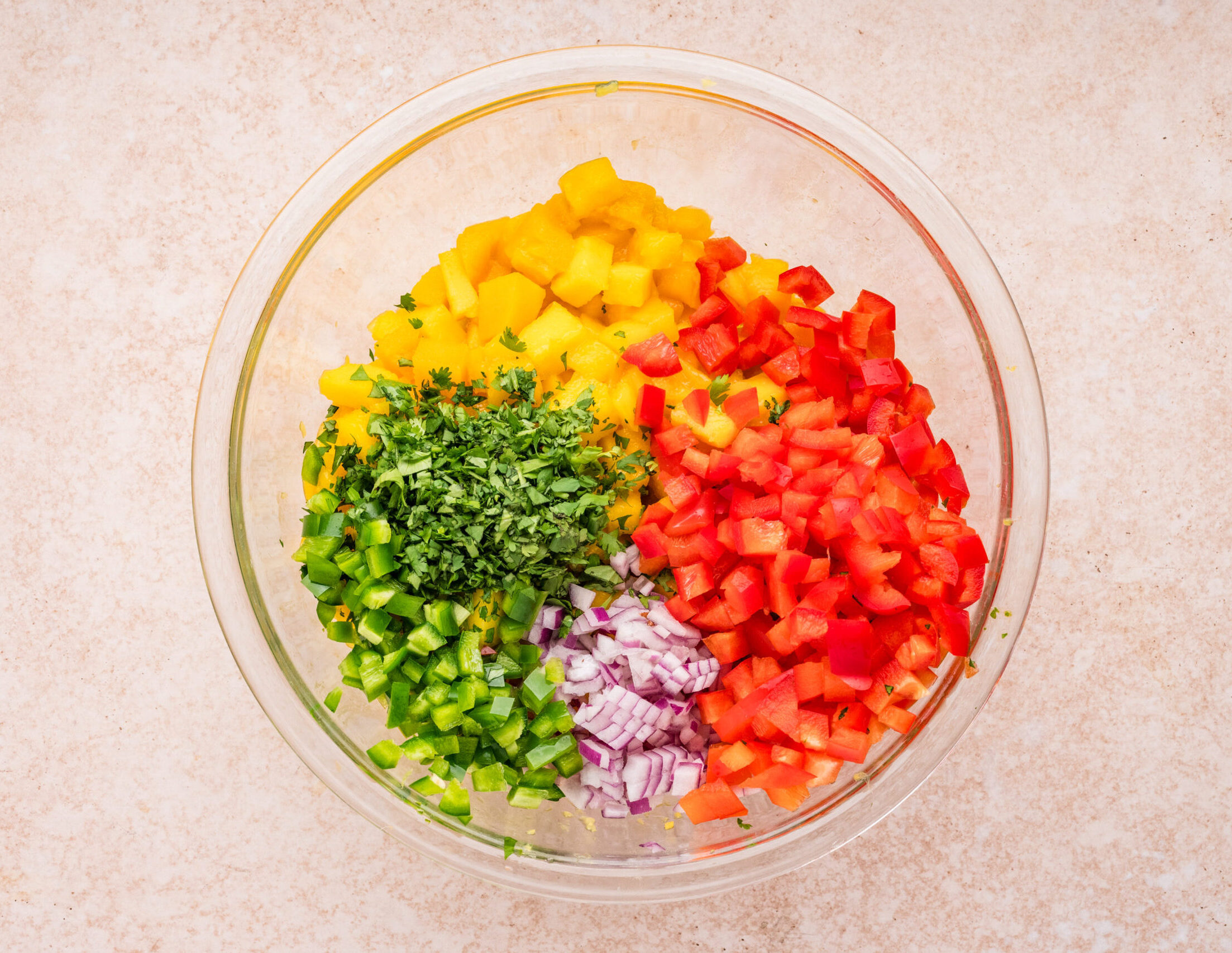
Place the diced mangoes, red bell pepper, red onion, cilantro, and jalapeño in a medium mixing or serving bowl.
Use a bowl with enough room to toss the salsa without crushing the mango.
Step 3: Add the Lime and Salt
Squeeze the juice of two limes over the ingredients. Add the zest of one lime and ½ teaspoon kosher salt.
Step 4: Toss Gently
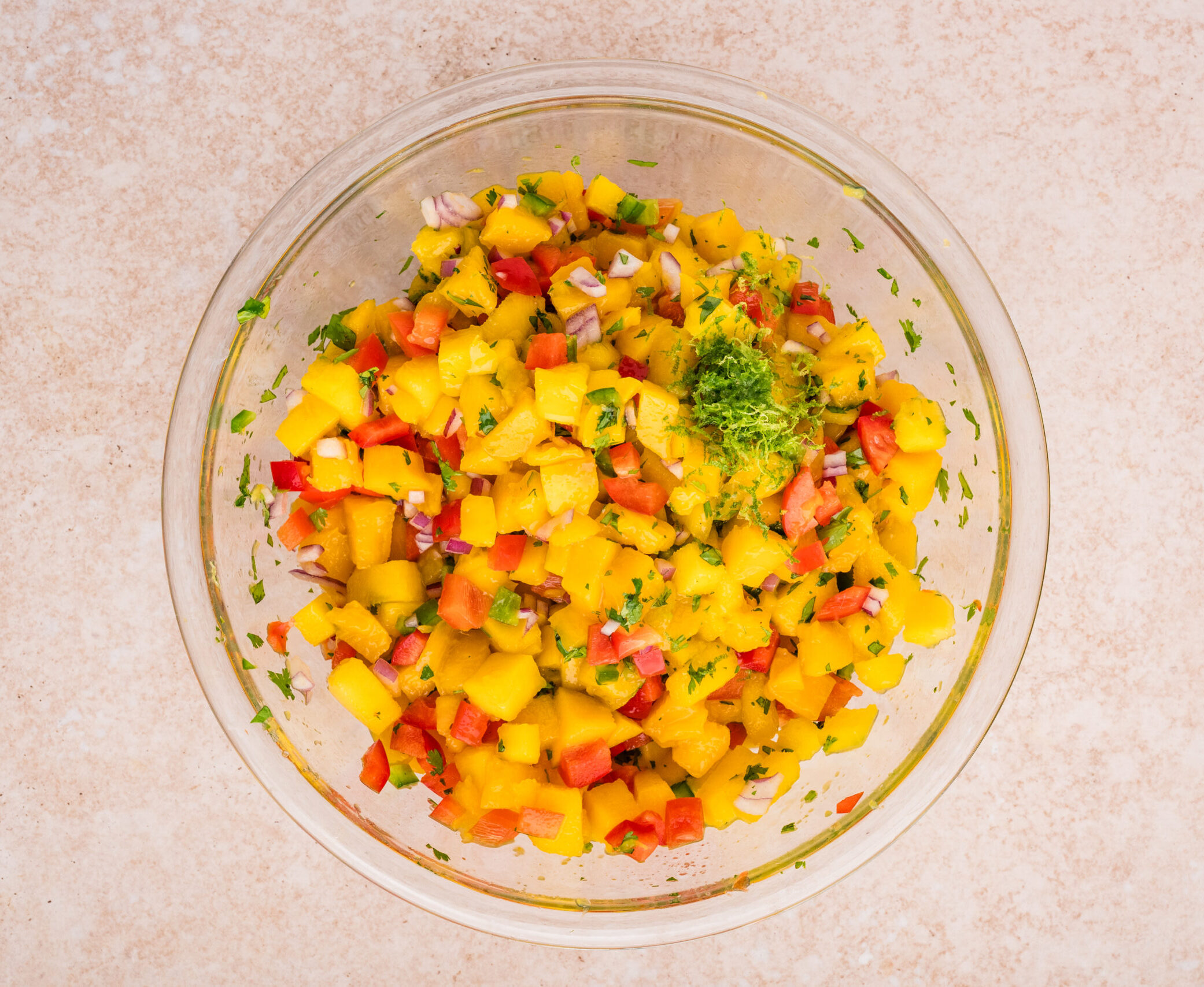
Use a large spoon or silicone spatula to gently fold everything together. Avoid vigorous stirring, especially when the mangoes are very ripe.
Step 5: Chill the Salsa
Cover the bowl and refrigerate the mango salsa for approximately 25 minutes.
This resting period allows the lime juice, zest, onion, jalapeño, cilantro, and salt to season the mango.
Step 6: Taste and Serve
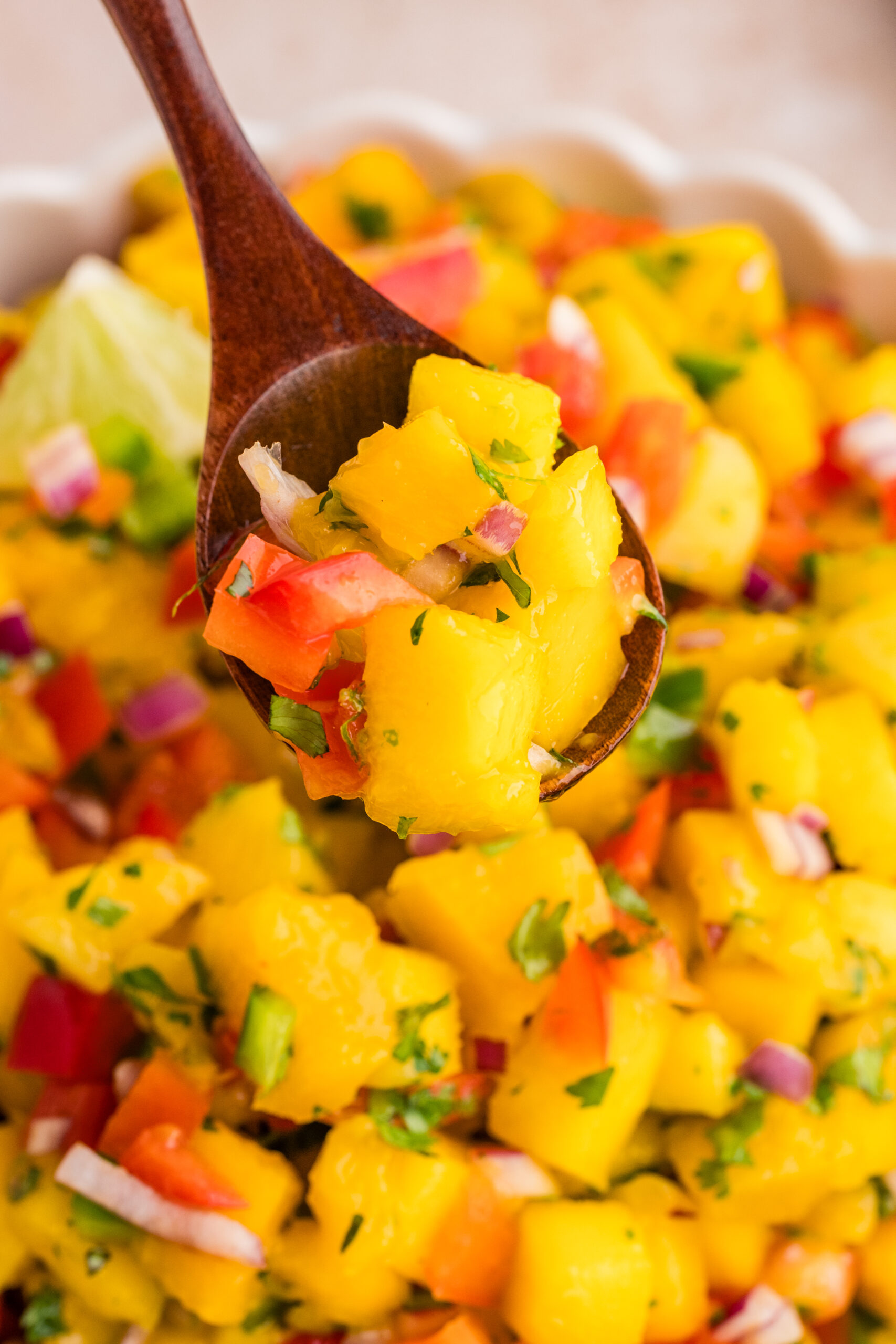
Stir the salsa gently and taste it. Add another pinch of kosher salt, a squeeze of lime juice, or a little more jalapeño as needed.
Serve chilled or slightly cool with tortilla chips or your favorite main dish.
Tips for the Best Mango Salsa
Choose Mangoes That Are Ripe but Not Mushy
A ripe mango gives the salsa its sweetness, while a little remaining firmness helps the pieces maintain their shape.
Cut Everything into Similar-Sized Pieces
Small, uniform pieces make the salsa easier to scoop and help distribute the mango, pepper, onion, cilantro, and jalapeño evenly.
Use Fresh Lime Juice
Fresh lime has a cleaner, brighter flavor that is especially noticeable in a no-cook recipe.
Zest the Lime Before Juicing It
A whole lime is much easier to hold while zesting. Once it has been squeezed, the peel becomes softer and more difficult to grate.
Do Not Skip the Resting Time
You can serve the salsa immediately, but a short rest in the refrigerator gives the flavors time to mingle.
Toss the Salsa Gently
Ripe mangoes can be delicate. Folding the ingredients together rather than stirring aggressively keeps the salsa chunky instead of mushy.
Taste Again Before Serving
Cold temperatures can soften the perception of salt and spice. Taste the salsa after chilling and adjust the seasoning right before serving.
How to Adjust the Spice Level
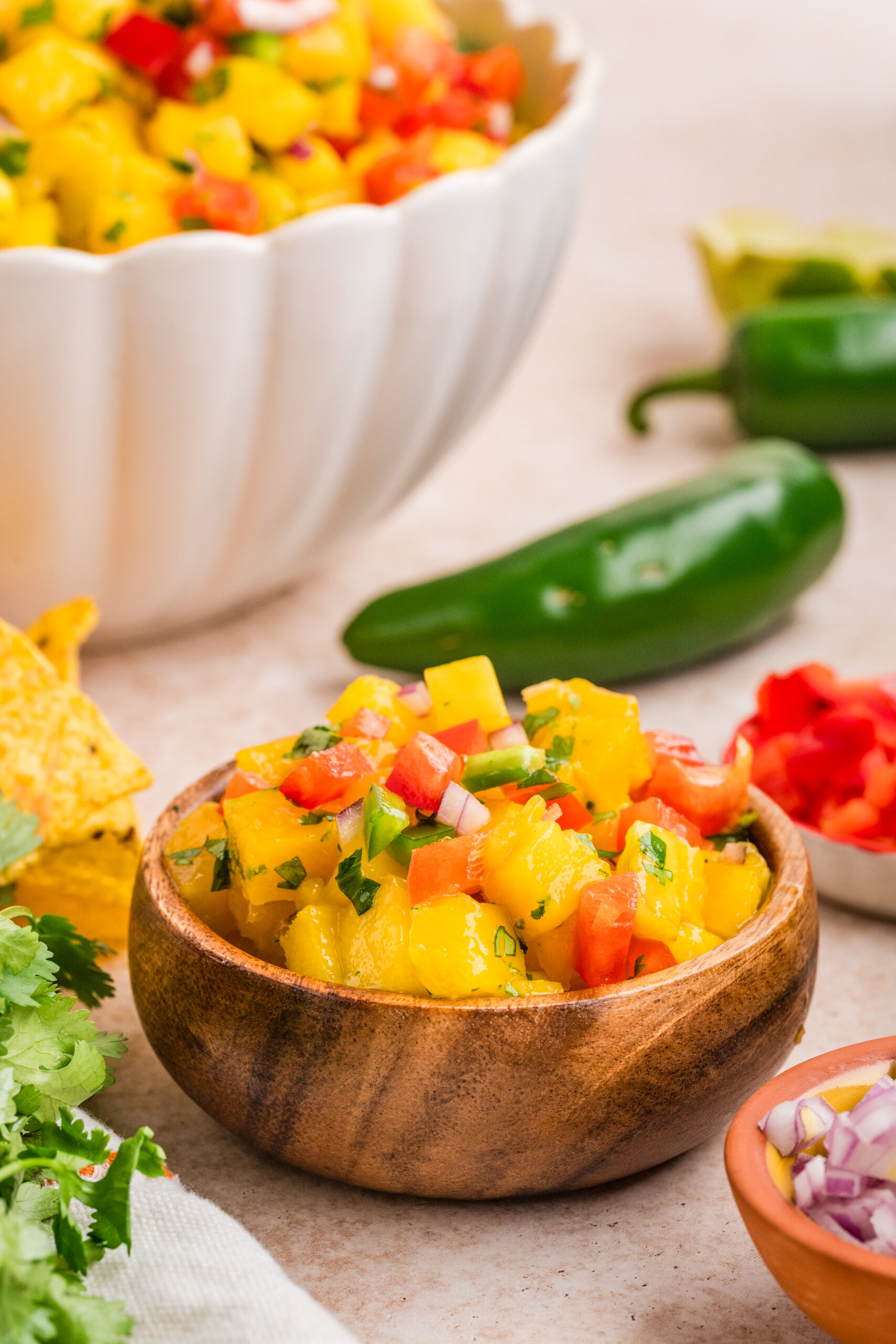
One of the easiest ways to customize this mango salsa recipe is to adjust the jalapeño.
Mild Mango Salsa
Use half a jalapeño with all seeds and membranes removed, or omit the jalapeño completely. The salsa will still have plenty of flavor from the lime, red onion, and cilantro.
Medium Mango Salsa
Use one whole jalapeño with its seeds and membranes removed. This gives the salsa a gentle background heat without overwhelming the mango.
Hot Mango Salsa
Leave a small amount of the jalapeño membrane attached or add a second jalapeño.
Extra-Spicy Mango Salsa
Replace the jalapeño with a small amount of finely minced serrano or habanero pepper. Begin with a very small quantity, mix well, and taste before adding more.
Easy Mango Salsa Variations
The basic recipe is delicious as written, but it is also easy to adapt.
Mango Avocado Salsa
Fold in one diced avocado immediately before serving. The avocado adds a creamy texture that pairs especially well with fish tacos and grilled chicken.
Mango Black Bean Salsa
Add one cup of rinsed and drained black beans. This turns the salsa into a heartier appetizer or filling for a vegetarian rice bowl.
Mango Corn Salsa
Add ¾ to 1 cup of cooked and cooled corn kernels. Fresh grilled corn adds a light smoky flavor, while thawed frozen corn is a convenient shortcut.
Mango Cucumber Salsa
Add one cup of finely diced English cucumber for more crunch and a refreshing summer flavor.
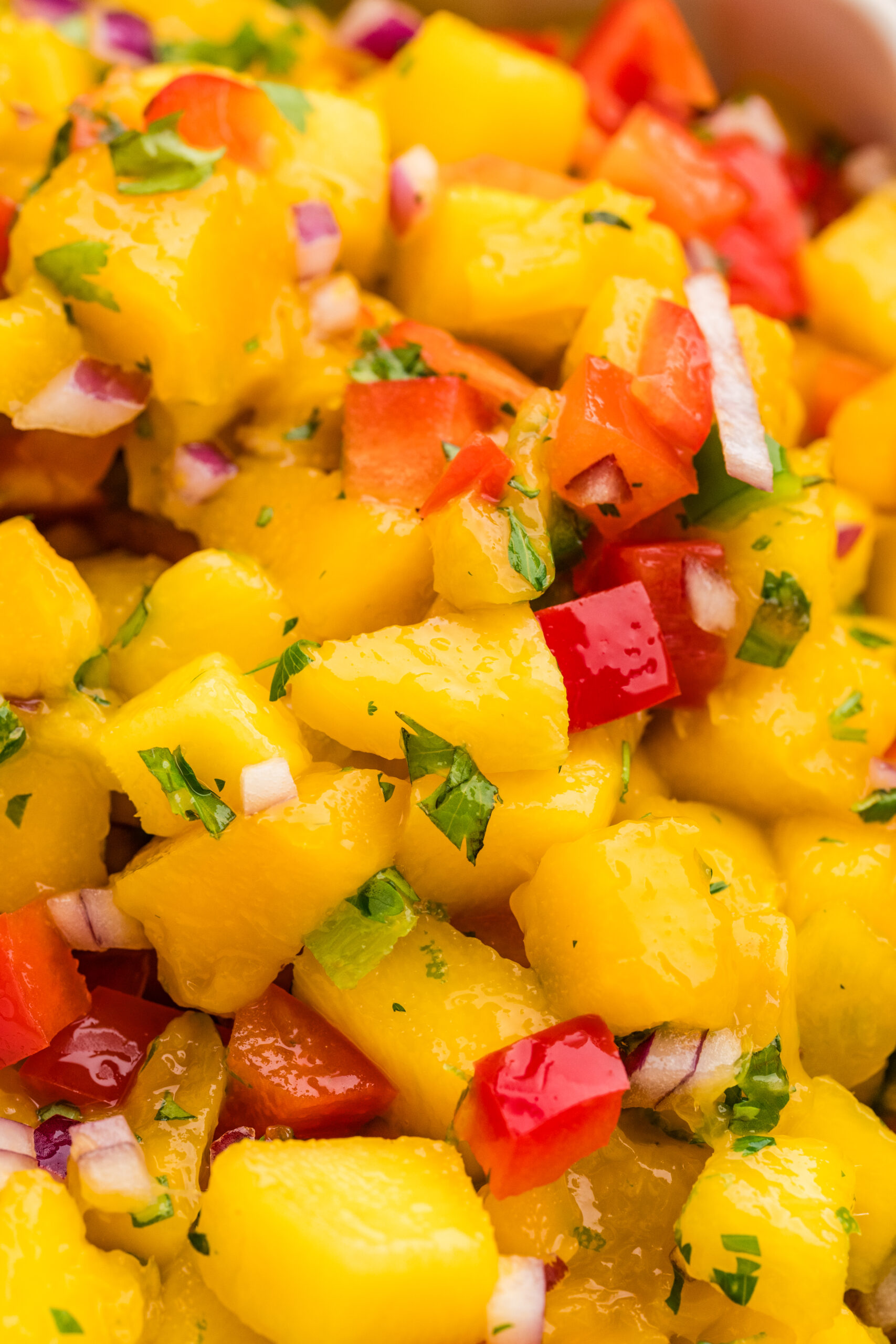
Mango Pineapple Salsa
Replace one mango with approximately 1½ cups diced fresh pineapple. This variation is especially good with grilled shrimp, pork, or chicken.
Mango Tomato Salsa
Add one cup of seeded, diced Roma tomatoes for a fruitier version of traditional pico de gallo.
Mango Salsa Without Cilantro
Leave out the cilantro or replace it with two to three tablespoons of fresh parsley or mint.
Peach Mango Salsa
Replace one mango with two ripe but firm peaches. This is a great variation during peak peach season.
What to Serve with Mango Salsa
Mango salsa is much more than a chip dip. Its combination of sweetness, acidity, crunch, and heat works with many different appetizers and main dishes.
Serve It with Tortilla Chips
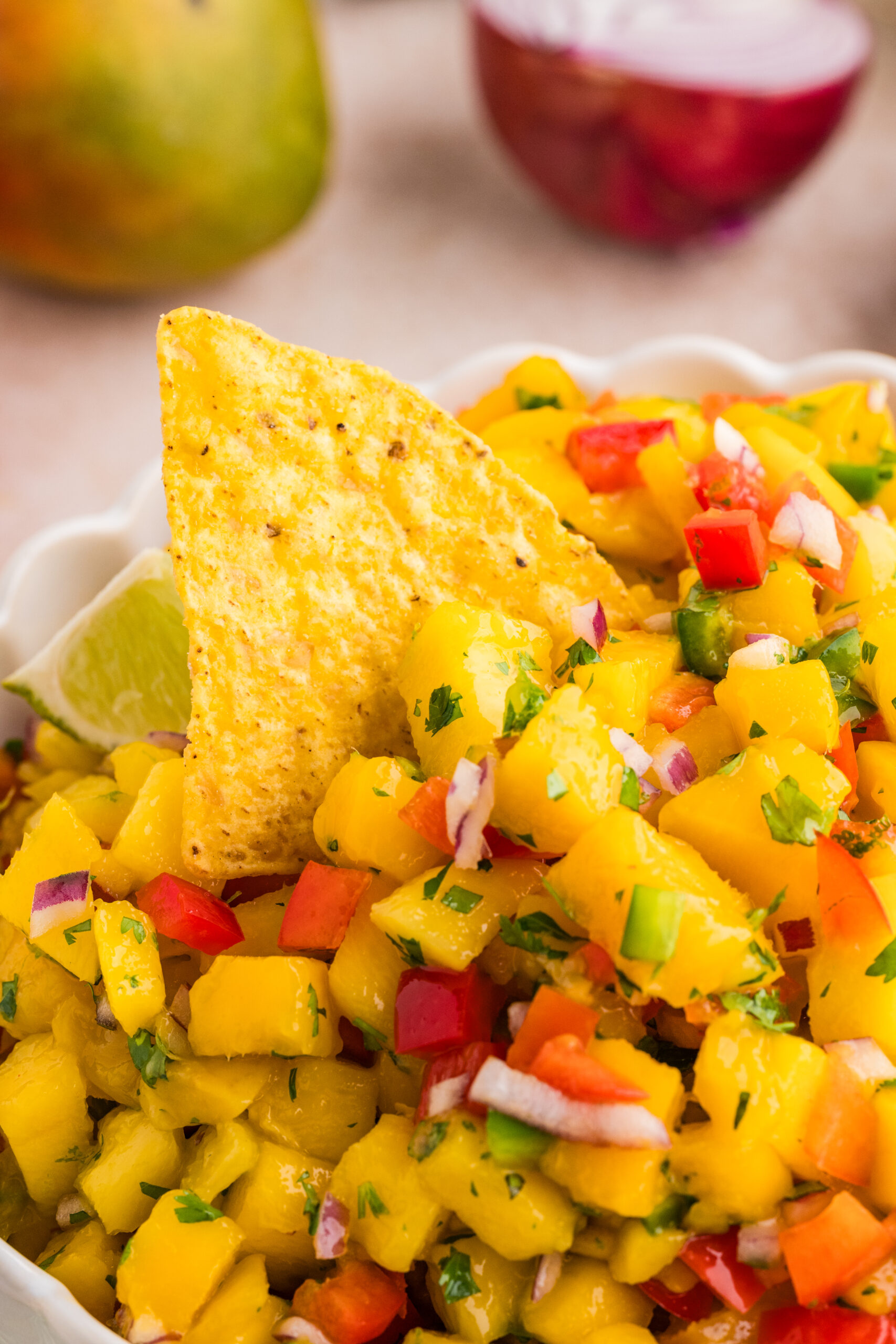
Spoon the salsa into a wide serving bowl and surround it with sturdy tortilla chips. For a colorful appetizer spread, serve it alongside this Cowboy Caviar recipe.
You can also spoon mango salsa over the finished platter when making my Best Nachos Supreme.
Add It to Taco Night
Mango salsa makes a bright, juicy topping for beef, chicken, pork, shrimp, and fish tacos.
Add a bowl to my Ultimate Taco Board so everyone can customize their tacos, or spoon it directly over these easy Slow Cooker Shredded Chicken Tacos.
Pair It with Fish or Seafood
The sweet mango and fresh lime balance richer seafood beautifully. Serve it over Air Fryer Salmon Bites or alongside this quick Garlic Butter Shrimp.
It would also make a refreshing finishing touch for these summer-ready Shrimp and Veggie Foil Packs.
Serve It with Grilled Chicken
Spoon the salsa over grilled chicken breasts, chicken thighs, or these colorful Grilled BBQ Chicken Kabobs.
Build a Rice or Quinoa Bowl
Add mango salsa to rice, quinoa, greens, avocado, black beans, grilled protein, and a drizzle of lime crema.
It can also be served beside this Fresh Corn and Black Bean Quinoa Salad for an easy warm-weather lunch.
Use It as a Salad Topping
Spoon the salsa over mixed greens and add grilled shrimp, chicken, salmon, avocado, or black beans. The lime juice and natural mango juices can help flavor the entire salad, so only a light additional dressing may be needed.
Can Mango Salsa Be Made Ahead?
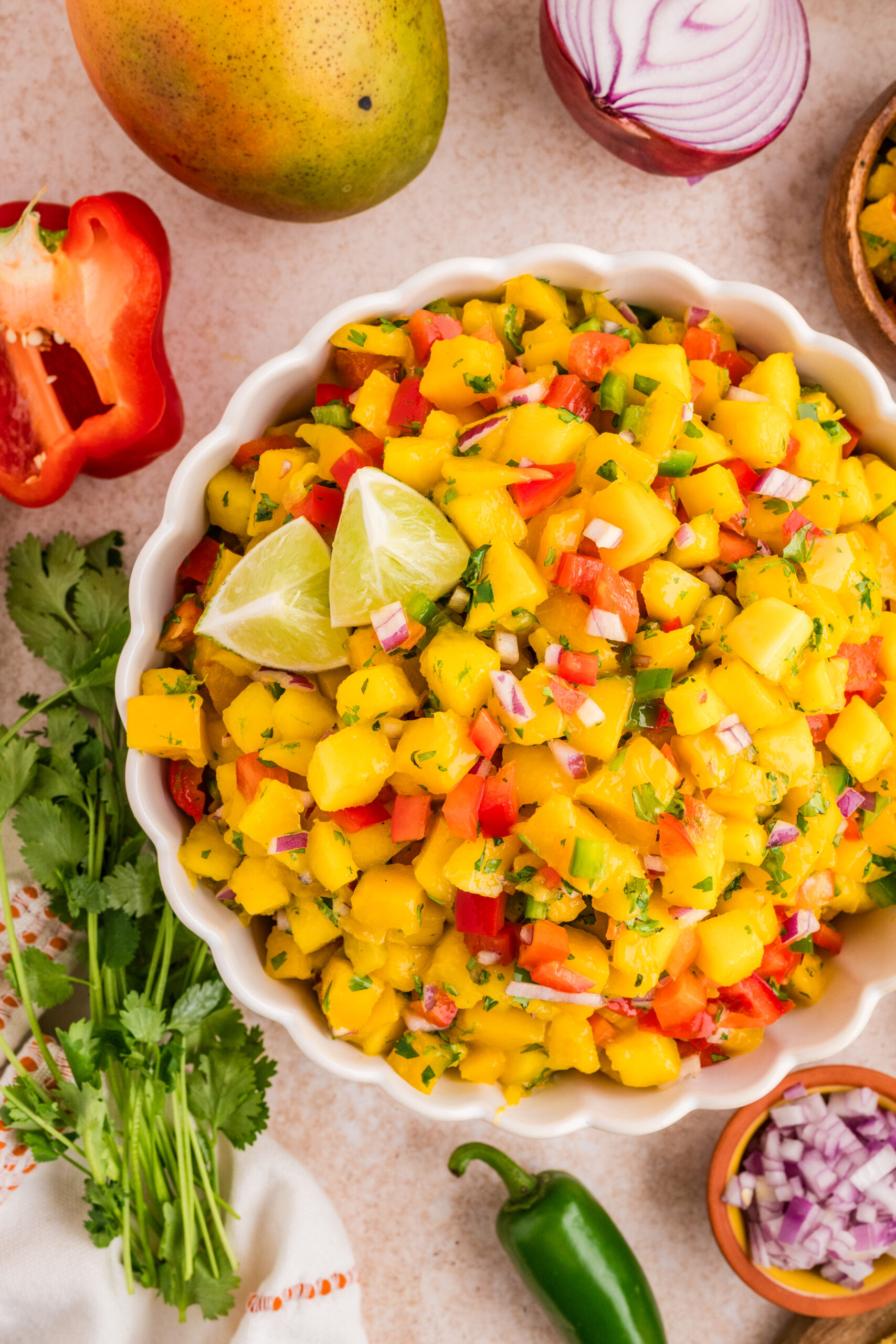
Yes. Mango salsa can be made several hours before serving and refrigerated in a covered container.
For the freshest flavor and firmest texture, prepare it the morning of the day you plan to serve it. The 25-minute resting time in this recipe is enough to blend the flavors without making the mango too soft.
You can also prepare some of the ingredients separately a day in advance:
- Dice the bell pepper, red onion, and jalapeño.
- Chop the cilantro.
- Juice and zest the limes.
- Store everything in separate airtight containers.
- Dice the mango and combine the salsa closer to serving time.
This method is especially helpful when preparing the salsa for a party.
How to Store Mango Salsa
Transfer leftover mango salsa to an airtight container and refrigerate it for up to two to three days.
The exact storage time will depend on how ripe the mangoes were when the salsa was prepared. Very ripe mangoes soften and release juice more quickly.
Stir the salsa gently before serving again. If a large amount of liquid has collected at the bottom, you can stir it back into the salsa or use a slotted spoon for serving.
For the best flavor and texture, enjoy the salsa within the first day or two.
Can You Freeze Mango Salsa?
Freezing is not recommended for this fresh mango salsa. Although the ingredients can technically be frozen, the mango, bell pepper, onion, and cilantro will lose much of their crisp texture after thawing.
Fresh mango salsa is quick enough to prepare that making a new batch usually produces a much better result.
Common Mango Salsa Mistakes to Avoid
Using Underripe Mangoes
Hard mangoes lack the juicy sweetness needed to balance the onion, lime, salt, and jalapeño.
Using Overripe Mangoes
Very soft mangoes may become mushy as soon as the salsa is mixed. Save those mangoes for smoothies, sauces, or frozen desserts.
Cutting the Pieces Too Large
Large chunks are harder to scoop with chips and can result in bites containing only one ingredient.
Using Too Much Onion
Red onion should add contrast, not dominate the mango. Measure it and dice it finely.
Adding Too Much Salt at Once
Begin with the listed quantity and adjust after the salsa rests. This is particularly important when substituting table salt for kosher salt.
Forgetting the Lime Zest
Lime juice provides acidity, but zest adds concentrated citrus aroma without adding more liquid.
Skipping the Resting Time
The salsa tastes good immediately, but allowing it to sit for about 25 minutes creates a more cohesive flavor.
Frequently Asked Questions About Mango Salsa
What kind of mango is best for mango salsa?
Any ripe, flavorful mango variety can be used. Choose mangoes that give slightly when pressed but are still firm enough to dice. Honey or Ataulfo mangoes have smooth flesh, while larger round varieties also work well.
Can I use frozen mango?
Fresh mango is best because it maintains a firmer texture. Thawed frozen mango tends to be softer and may release more liquid.
When frozen mango is the only option, thaw it completely, drain it well, and pat it dry before adding the remaining ingredients.
Can I make mango salsa without jalapeño?
Yes. Omit the jalapeño for a completely mild mango salsa. You can also use a small amount of green bell pepper for color and crunch without adding heat.
Can I make mango salsa without cilantro?
Yes. Leave the cilantro out or replace it with chopped parsley or a smaller amount of fresh mint.
Can I use lemon instead of lime?
Fresh lemon juice can be substituted, but the salsa will have a different flavor. Lime pairs more naturally with mango, jalapeño, and cilantro.
Why is my mango salsa watery?
Mangoes naturally release juice after they are diced and salted. Very ripe mangoes release even more.
Serve the salsa with a slotted spoon, drain off a small amount of liquid, or stir the liquid into a rice bowl or salad.
How long does mango salsa last in the refrigerator?
Store it in an airtight container for up to two to three days. It will have the best flavor, color, and texture on the day it is made.
Is mango salsa spicy?
This recipe has a mild to medium heat level when made with one seeded jalapeño. Use half a jalapeño for a milder salsa or leave some membrane attached for more heat.
Is mango salsa gluten-free?
The salsa ingredients are naturally gluten-free, dairy-free, and vegan. Check the labels on packaged chips, tortillas, or other foods served with it when preparing the recipe for someone with a food allergy or intolerance.
Print
Easy Mango Salsa Recipe
- Total Time: 30 minutes
- Yield: 4 cups or 8 servings 1x
- Diet: Vegan
Description
- This easy mango salsa recipe combines ripe mangoes, crisp red bell pepper, red onion, cilantro, jalapeño, fresh lime juice, lime zest, and kosher salt. It is sweet, tangy, refreshing, and perfect with chips, tacos, grilled chicken, shrimp, or salmon.
Ingredients
- 3 large ripe mangoes, peeled, pitted, and diced
- 1 medium red bell pepper, seeds and membranes removed, finely diced
- ⅓ cup finely diced red onion
- ⅓ cup chopped fresh cilantro
- 1 jalapeño, seeds and membranes removed, finely diced
- Juice of 2 limes
- Zest of 1 lime
- ½ teaspoon kosher salt, plus more to taste
Instructions
Add the diced mangoes, red bell pepper, red onion, cilantro, and jalapeño to a medium mixing or serving bowl.
Squeeze the juice of two limes over the ingredients.
Add the lime zest and ½ teaspoon kosher salt.
Gently toss until all the ingredients are evenly combined.
Cover and refrigerate the salsa for approximately 25 minutes to allow the flavors to blend.
Stir gently, taste, and add more kosher salt or lime juice as needed.
Serve chilled or slightly cool with tortilla chips, tacos, grilled meats, shrimp, or fish.
Notes
- Use mangoes that are ripe and slightly soft but not mushy.
- Cut the mango and vegetables into small, similarly sized pieces for the best texture.
- For mild salsa, use half a jalapeño or omit it completely.
- For spicier salsa, leave a small amount of jalapeño membrane attached.
- When substituting regular table salt for kosher salt, begin with ¼ teaspoon and add more only after tasting.
- Store leftover salsa in an airtight container in the refrigerator for up to two to three days.
- This recipe is best served fresh and is not recommended for freezing.
- Prep Time: 5 minutes
- Cook Time: 25 minutes, chill/rest time
- Category: Appetizer, Dip, Condiment
- Method: No-Cook
- Cuisine: Mexican-Inspired
This post may contain affiliate links. As an Amazon Associate, I earn from qualifying purchases at no additional cost to you.




I’ve never had mango salsa before. I bet it is delicious with the sweetness from the mangoes and spices from the jalapeños. I’ll have to try it soon. I’m just waiting on the food borne illnesses to chill out before I eat too much produce.
The sweet mango with fresh lime and a little jalapeño sounds like such a refreshing combination. I like that the red pepper adds some crunch too, so there’s a nice mix of textures. This would be lovely with grilled chicken or fish on a warm day.
This mango salsa is not only delicious and colorful, it is healthy too. As the summer season slowly wraps up, I'm going to make sure to pick up some mangoes and make this salsa. I am inspired by the easy ingredients and will replace the cilantro with parsley. Yum!
Mango and Summer, what a wonderful combo - love you talk about letting the salsa rest so the lime and jalapeño can mingle with the mango is smart.
This no-cook recipe delivers a beautiful burst of colour and fresh flavour for dining now the weather is lovely and warm. The trick of soaking the red onion in cold water to tame its bite is a great way to balance the flavours smoothly. I have got to try this!
First, this salsa looks beautiful!! Second, it sounds so delicious. My husband and I make a lot of traditional red salsa, but we need to branch out and make something like this! Thanks for sharing this great recipe.
I recently had avocado toast with mango salsa on it. It would be fun to try your recipe! Sounds delicious and is such a unique flavor.
Yummy. Now I have something to add to the chips I'm not supposed to eat. Thanks for the great recipe. I'm sure it will come in handy.
We just bought a new house and it has a mango tree in the back. I hadn't made anything with mango before, so this was perfect!
Yum! This looks so fresh, colorful, and perfect for summer. I love the combination of sweet mango with the zesty flavors. It would be amazing with tortilla chips or served over grilled chicken or fish.
This was so perfect on our shrimp tacos! I'm keeping this one forever. Thanks so much.
This mango salsa looks wonderfully fresh and vibrant! I love the combination of sweet mango, zesty lime, crisp vegetables, and jalapeño. It would be perfect for summer entertaining.
Yum, I need to make this salsa. It looks amazing. I just love mangos.
I have to admit that mango salsa is my favorite salsa. I love making it fresh and this is a recipe I'm going to try this week!
Mango salsa!! I have never heard of it before but I surely love mangoes. I have shared this post with my friend who loves to cook and is planning a houseparty soon! I hope to devour this dish soon!