Introduction
Moving into a new home often leaves you staring at bare walls, empty corners, and a space that just doesn't feel lived-in yet. Indoor plants are one of the easiest fixes for that, softening a room's hard edges while genuinely changing how it feels to spend time there. Whether you're drawn to a cluster of small succulents on a windowsill or a single huge indoor plant that commands the whole room, the right greenery can reshape both the look and the mood of a space. This article explores how plants support wellbeing, offers guidance on choosing and placing them thoughtfully, and covers what it takes to keep them thriving for years-without steering into product recommendations.
The Benefits of Indoor Plants for Everyday Living
Research suggests indoor plants can help ease stress and sharpen concentration, which matters more than ever in work-from-home setups. That said, claims about dramatic air purification tend to get overstated-plants may nudge perceived air quality in a positive direction, but they're no substitute for proper ventilation. Where they really shine is visually: plants add texture and vertical interest, soften harsh architectural lines, and help carve out distinct zones within open-plan layouts. It's a straightforward application of design fundamentals like balance and scale, dressed up in leaves.
Choosing the Right Indoor Plants for Your Space
Before buying anything, take stock of your light levels-is it low, medium, or bright indirect light?-and note any temperature swings near windows or vents. Compact plants work well on desks and shelves, medium-sized ones fill out corners and entryways, and a larger, dominant specimen can anchor a living room, provided you've got the ceiling height and floor space to support it. A studio apartment might do better with vertical shelf plants, while a roomier living space can handle floor specimens with ease. Whatever you choose, double-check that it's on the list of pet-safe plants, and think about the stability of tall pots so they don't tip over.
Designing with Indoor Plants: Layout, Style, and Focal Points
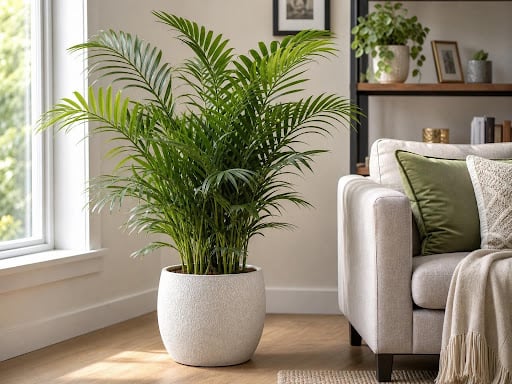
Grouping plants of different heights and leaf shapes creates a sense of balance, but don't forget to leave negative space-without it, arrangements can start to feel crowded. A single large plant, meanwhile, can act as a focal point: tucked beside a sofa, filling an otherwise empty corner, or marking the transition between living and dining areas. The right approach often depends on style. Minimalist interiors tend to favor a handful of well-chosen plants, bohemian spaces lean into layered greenery, and industrial designs often pair one bold, structural plant with a simple, understated container.
Practical Care Basics: Keeping Indoor Plants Healthy Long-Term
Rather than watering on a fixed schedule, check the soil moisture first-it's a far more reliable guide. Pots with drainage holes and well-draining soil go a long way toward preventing root rot. Keep an eye out for leggy growth or pale leaves, both signs a plant is craving more light; when you do move it, do so gradually rather than all at once. And if you notice roots circling the pot or water draining suspiciously fast, that's your cue-the plant is likely root-bound and ready for a slightly larger container.
Common Mistakes When Decorating with Indoor Plants
It's easy to overdo it: too many plants crammed into a small room create clutter and pile on maintenance work, and often one or two statement plants make a bigger impact than a dozen small ones scattered around. Choosing the wrong light conditions just because a plant looks good in a certain spot will stress it out over time, and the same goes for picking an oversized plant without factoring in how much bigger it's going to get. A little regular dusting and pruning keeps everything looking intentional rather than neglected.
Key Takeaway: Prioritizing plant health over pure aesthetics leads to a more sustainable, better-looking space in the long run.
Bringing It All Together
The homes that pull off plant decor successfully tend to balance thoughtful plant choices with practical care and everyday function. Start small, pay attention to how light and conditions behave in your space, and let size and placement evolve as your confidence grows. Think of plant decorating less as a finished project and more as an ongoing process-your long-term care habits end up mattering just as much as the choices you made on day one.
*This is a collaborative post. All views and texts are our own.